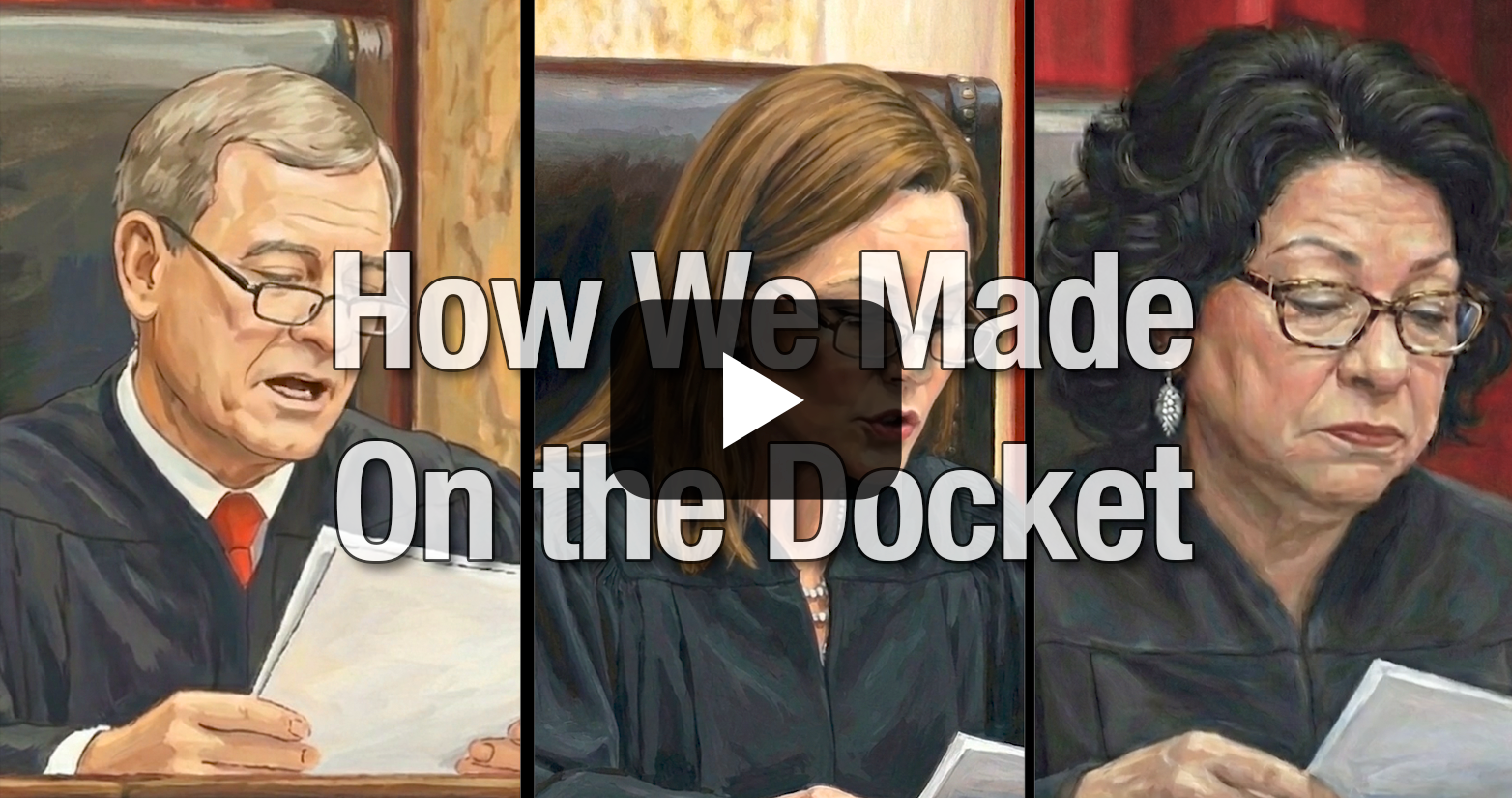
On the Docket strives to make the decisions of the US Supreme Court more accessible to a broader audience. It pairs AI-generated video with authentic audio of the Court’s key opinions and dissents. The University of Minnesota and Professor Jerry Goldman selected Spooler to help create it.
Longtime SCOTUS reporter Nina Totenberg got it right away, featuring the project on NPR’s All Things Considered.
The Supreme Court’s decisions directly impact US society and culture. Yet the most powerful judicial body in the world does its work largely behind closed doors. Cameras are banned from the Court chamber. No one except the small audience in attendance can see the Justices summarizing their decisions.
On the Docket changes that.
“After the remarkable reception of Brown Revisited, the Spooler team was thrilled to work with Goldman, Johnson, and Idib again to apply cutting-edge Al video creation techniques to actual Court audio and transcripts. The result enables new audiences to engage with these important civic moments,” said Spooler CEO James O. Boggs.
Archival Audio, Cutting-Edge Video
Here’s how we did it: Spooler used the original audio of the selected cases from the United States National Archives. Starting with photos of the Justices, we created synthetic still images. An AI workflow animated the still images to the original audio.
The audio is authentic. The video is AI-generated. The distinction is transparent. The result is transformative.
Designed for Access
“I came across recordings of opinion announcements starting in the early 1990s,” Goldman said. “These sessions were routinely recorded, but the public rarely got to see the Justices deliver them. It dawned on me that we could bring these recordings to life as videos with the help of AI.”
Idib—who worked with us on the award-winning “Brown Revisited” project—built OnTheDocket.org and developed a social strategy designed to remove every barrier between citizens and the highest court.
“Every design decision was made with that in mind,” said Francesco Stagno d’Alcontres, Idib’s founder and digital director. “This is about transparency. This is about access.”
Learn more about the project here, or subscribe on YouTube.